
Contents
The short answer: AI changes speed, scale and uncertainty
Cybersecurity has always been a race between attackers and defenders. AI changes that race by making some tasks faster, cheaper and easier to repeat. That matters for phishing, malware analysis, vulnerability research, identity attacks, monitoring and incident response.
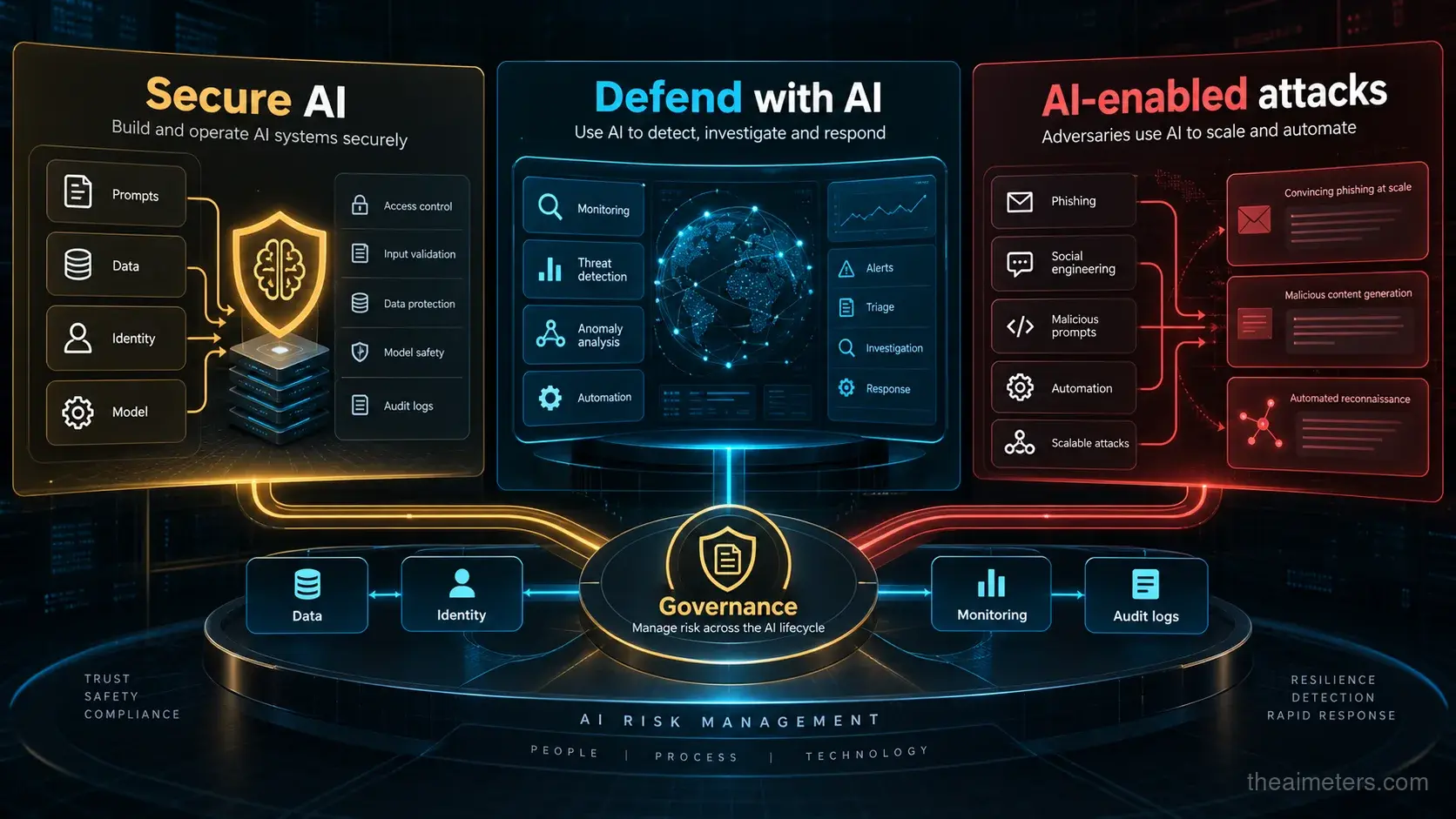
For defenders, AI can help analyze alerts, summarize incidents, detect anomalies, generate queries, prioritize risk and support security teams that are overwhelmed by data. For attackers, AI can help write convincing messages, translate scams, automate reconnaissance or adapt social engineering.
The result is not a simple advantage for one side. Organizations need to secure their AI systems, use AI carefully in defense and prepare for adversaries who also have access to increasingly capable tools.
Defenders use AI to detect and respond faster
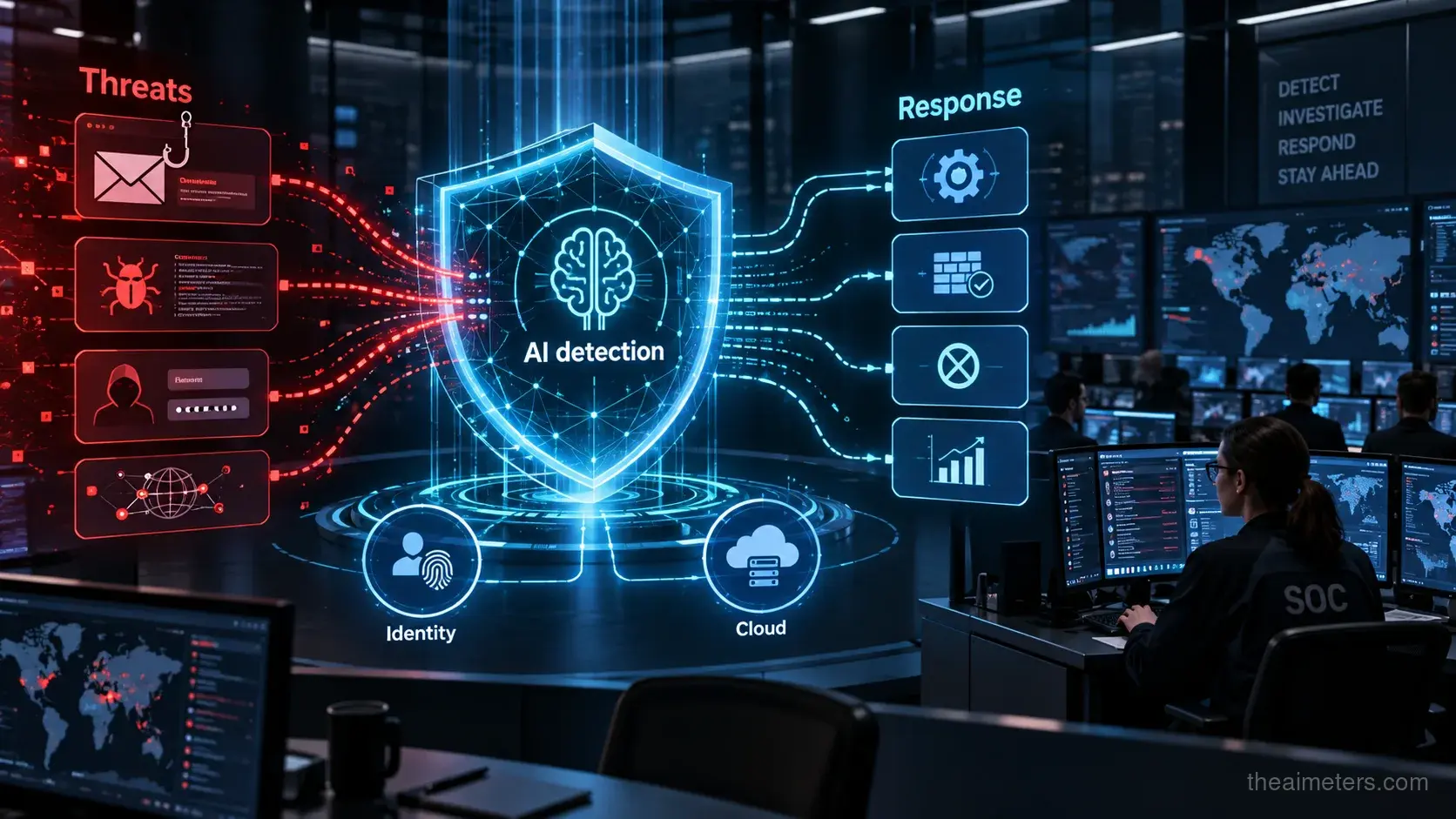
Security teams already rely on automation and machine learning in areas such as spam filtering, fraud detection, endpoint protection, identity risk scoring and anomaly detection. Generative AI adds new capabilities for summarizing evidence, explaining alerts and helping analysts query complex systems.
In a security operations center, AI can reduce friction. It can group related alerts, translate logs into readable summaries, suggest investigation steps, draft incident timelines and help junior analysts understand unfamiliar signals.
The strongest defensive uses still keep humans in control. AI can accelerate triage, but high-impact actions such as disabling accounts, blocking production systems or declaring an incident should remain governed by policy, approval flows and audit logs.
Attackers can use AI to scale social engineering and automation
AI can lower the cost of producing convincing phishing messages, fake support conversations, translated scams and personalized lures. It can also help less skilled attackers write scripts, understand error messages or automate repetitive reconnaissance.
This does not mean AI automatically creates elite attackers. Many cyberattacks still depend on stolen credentials, unpatched systems, exposed services, weak identity controls and poor operational security. AI often amplifies existing weaknesses rather than replacing the whole attack chain.
The defensive implication is practical: organizations should expect more volume, better language quality and faster adaptation in social engineering campaigns. Strong identity, phishing-resistant authentication, detection engineering and user reporting remain central.
AI systems also need to be secured
Using AI in a company creates new assets to protect: prompts, model endpoints, training data, retrieval indexes, tool integrations, logs, evaluation datasets and agent permissions. These systems can contain sensitive business context even when the underlying model is provided by a third party.
AI-specific risks include prompt injection, data leakage, insecure tool calls, model manipulation, poisoned data, unsafe outputs and excessive permissions. These risks are especially important when AI agents can read files, query databases, send messages or trigger workflow actions.
Securing AI systems therefore looks like a blend of classic cybersecurity and AI governance: access control, data classification, input validation, output validation, monitoring, red teaming, incident response and clear limits on what the system is allowed to do.
AI changes security operations work
AI can make security operations more efficient by reducing the time analysts spend reading noisy alerts and searching across tools. It can turn logs, tickets and threat intelligence into a clearer starting point for investigation.
But AI can also create new operational risks. A confident summary may omit an important detail. An automated playbook may act too aggressively. A model may be wrong about the severity of an event. Security teams need evaluation and feedback loops, not blind trust.
The best pattern is augmentation. AI helps analysts move faster, but analysts define the investigation standard, validate the evidence and decide what actions are appropriate for the business context.
The main risks are trust, permissions and data exposure
The central cybersecurity question is not only whether AI can detect threats. It is what data the AI can see, what tools it can call, what actions it can take and how those decisions are reviewed.
An AI assistant connected to logs may be low risk if it only summarizes read-only data. An agent connected to identity systems, ticketing, cloud consoles or code repositories needs stronger controls because mistakes can have real operational consequences.
This is why frameworks from organizations such as NIST emphasize securing AI systems, defending with AI and preparing for AI-enabled attacks together. Treating these as separate problems leaves gaps.
What comes next for AI and cybersecurity
Cybersecurity will likely become more AI-assisted on both sides. Defenders will use AI agents for triage, detection engineering, malware analysis, policy checks and response coordination. Attackers will use AI to increase volume, personalization and speed.
At the same time, the basics will become more important, not less: asset inventory, patching, identity, least privilege, logging, backup, segmentation, secure software development and incident response readiness.
The likely future is not autonomous security without people. It is security work where humans supervise faster systems, define boundaries, audit actions and focus on judgment while AI handles more of the repetitive analysis.