
Contents
Why data centers can be noisy
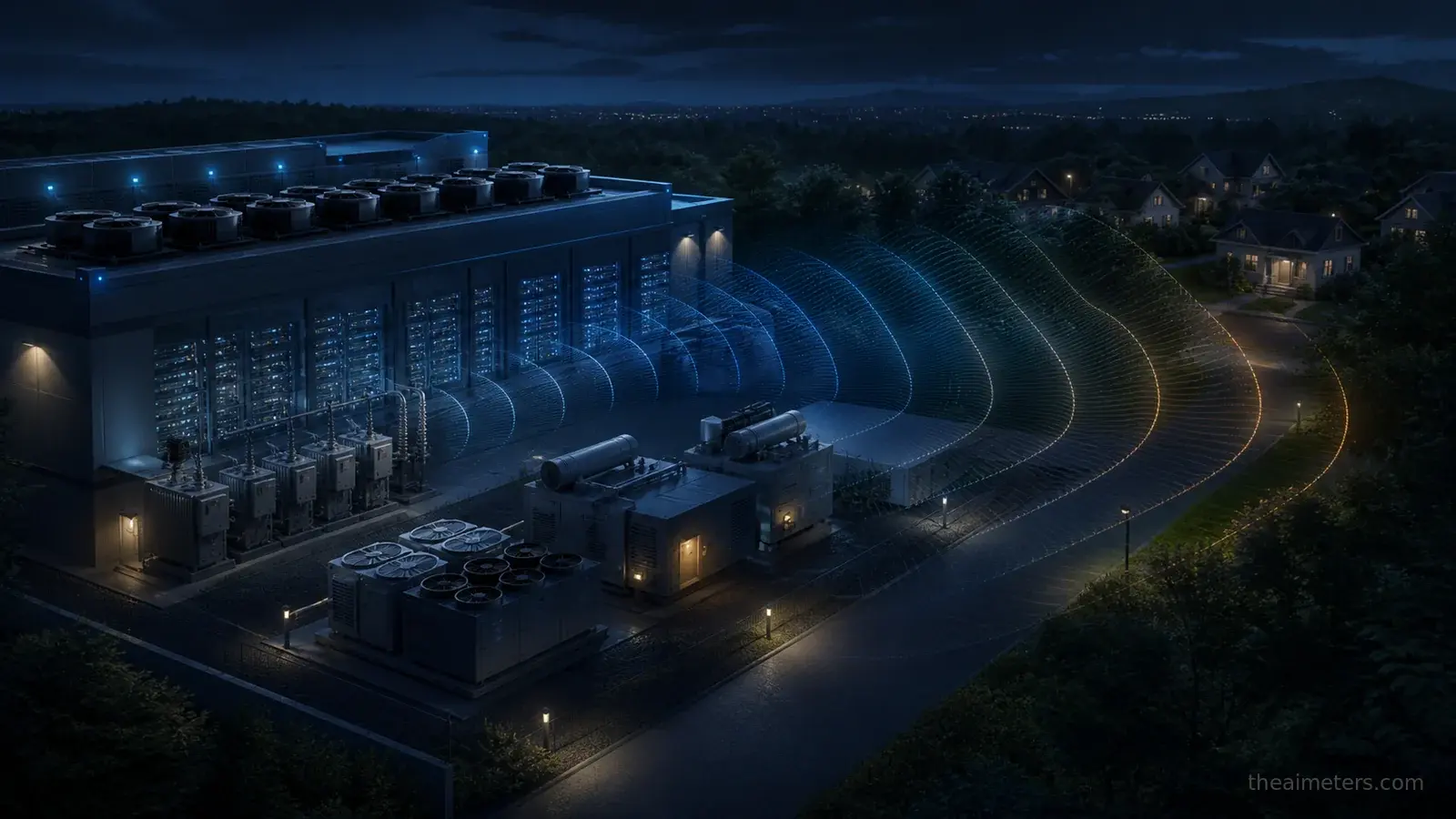
A data center is a physical industrial facility, not just a quiet building full of computers. Servers generate heat, and that heat has to be removed continuously. The systems that move air, pump liquid, reject heat and maintain backup power can create a steady acoustic footprint.
The sound may come from rooftop cooling units, chillers, fans, pumps, transformers, substations, backup generators or temporary power equipment. Some of this noise is broadband, like airflow. Some can be tonal, low-frequency or repetitive, which people may find more intrusive even when the measured decibel level is not extreme.
The impact depends heavily on distance and site design. A facility in an industrial zone far from homes may be barely noticeable. A similar facility near residential areas, schools or quiet rural roads may become a real local concern.
Is data center noise specific to AI?
Noise pollution is not unique to AI. Traditional cloud data centers, colocation sites and telecom facilities can also create noise. The issue comes from the physical infrastructure required to power and cool computing equipment.
AI can make the subject more visible because large GPU clusters are dense, power-hungry and heat-intensive. When operators deploy very high-density racks, temporary power systems or rapid expansions, the supporting equipment can become larger, more numerous or more heavily used.
That does not mean every AI data center is loud. It means noise should be considered alongside electricity, water, land use and grid connections when planning and evaluating AI infrastructure. For the broader infrastructure picture, see How AI datacenters work.
The main sources of data center noise
Cooling is often the most important source. Air-cooled systems rely on large fans and heat rejection equipment. Liquid cooling can reduce some airflow needs inside the building, but it still requires pumps, dry coolers, chillers or other equipment to move heat out of the facility.
Power infrastructure can also be audible. Transformers and substations may hum. Backup generators are usually tested periodically and may run during outages or grid events. Temporary gas turbines or mobile generation systems can be especially noticeable if they operate for long periods.
Construction is a separate category. Communities may experience truck traffic, pile driving, heavy machinery and site work before the facility is even operational. A full assessment should distinguish construction noise from long-term operational noise.
Why communities notice data center noise
Noise is experienced locally. A global AI service may feel abstract, but a nearby resident hears the fans, tones or generator cycles at a specific place and time. Nighttime noise can be especially disruptive because background sound is lower and people expect quiet.
Low-frequency or tonal sound can also be difficult to judge from simple average decibel numbers. Two sites with similar sound levels may feel different depending on pitch, vibration, direction, barriers, weather and how often the sound occurs.
This is why community concerns should not be dismissed as a minor side issue. Even when a data center provides useful digital services and economic activity, it can still create local burdens that deserve measurement, disclosure and mitigation.
Documented cases show why the issue matters
Northern Virginia has become one of the clearest examples of data center noise becoming a planning issue. Local reporting and county discussions have described resident complaints around constant or tonal noise, and Prince William County approved rules aimed at limiting data center noise near homes.
The Memphis area has also brought attention to AI infrastructure noise. Reporting around xAI’s Colossus facility and nearby Southaven residents described complaints linked to turbines and other infrastructure associated with the site. That case is important because it connects a highly visible AI buildout with local environmental and quality-of-life concerns.
These examples should be interpreted carefully. They do not prove that all data centers are noisy or that all AI facilities create the same impact. They show that noise can become a material issue when large compute infrastructure is placed close enough to communities without adequate controls.
How data center noise can be reduced
Noise can be reduced through site selection, setbacks, building orientation, acoustic barriers, equipment enclosures, quieter fans, vibration isolation, landscaping, operational limits and careful generator testing schedules.
Good design starts early. It is easier to orient noisy equipment away from homes, place cooling systems behind barriers and model tonal noise before construction than to retrofit a site after residents begin reporting problems.
Monitoring also matters. Communities and regulators need clear baselines, nighttime measurements and public processes for complaints. Operators need incentives to solve issues before they become long-running disputes.
Why noise belongs in AI environmental impact discussions
Most public discussion about AI infrastructure focuses on electricity, water and carbon. Those metrics matter, but they do not capture every local effect of a datacenter campus. Noise, traffic, land use and visual impact also shape whether communities accept new infrastructure.
A responsible AI infrastructure strategy should therefore evaluate both global metrics and local impacts. A site can be efficient in energy terms and still be poorly placed if it creates persistent sound problems for nearby residents.
For TheAIMeters, this means treating noise as part of the environmental impact cluster rather than as a separate controversy. It is another reminder that AI depends on physical infrastructure, and that infrastructure has to coexist with real communities. See also AI Environmental Impact.
Further reading and references
- U.S. Department of Energy — Report on rising electricity demand from data centers
- Prince William County — Data Center Ordinance Advisory Group archive
- Prince William County — Noise violations and steady tonal noise
- The Washington Post — Data center noise in Northern Virginia neighborhoods
- Mississippi Today — Southaven residents complain of noise from xAI data center turbines